Essay Competition
Make your university application stand out by entering the
‘Rising Scholars Essay Competition 2026’ (Q3)
Hosted by The Cambridge Tutor!
Submit your essay using the following link
Submit Here!
Deadline: 31st August 2026
Late Entry Deadline: 30th September 2026
Choose an essay to explore from a range of subjects below:
-
The Beowulf poet describes a world in which glory can only be won through conflict, yet cannot outlast death. Is this a pessimistic vision — or an honest one?
'History is written by the literate.' To what extent does our knowledge of pre-literate societies in early medieval Britain depend on the assumptions of monastic scribes?
The Vikings have been portrayed alternately as barbaric raiders and as sophisticated traders and settlers. Which portrayal is closer to the truth — and why has the question mattered so much?
To what extent did the Norman Conquest of 1066 represent a decisive rupture in the continuity of English language and culture?
-
Heinrich Schliemann excavated Troy in the nineteenth century by digging straight through it. What does his story tell us about the relationship between the desire to find the past and the ability to understand it?
'We do not inherit the earth from our ancestors — we borrow it from our children.' Does this proverb capture the right ethical framework for decisions about excavating and disturbing the past?
The Elgin Marbles have been in the British Museum since 1816. Should they be returned to Greece — and on what principle should this kind of decision be made?
What can the study of rubbish reveal about past societies that other forms of evidence cannot?
-
Le Corbusier described the house as 'a machine for living in'. Is this an inspiring vision for architecture — or a dehumanising one?
The Pruitt-Igoe housing project in St Louis, widely praised when built in 1954, was demolished in 1972 having become a byword for urban failure. What does its story tell us about architecture and society?
Should architects be held morally responsible for the social consequences of their buildings?
'Architecture is the will of an epoch translated into space.' Mies van der Rohe's claim implies buildings reflect their time. Does great architecture transcend it?
-
Edward Said argued that Western scholarship on the 'Orient' has been shaped more by power and prejudice than by genuine knowledge. Is he right — and what are the implications for how we study Asia and the Middle East today?
Confucius placed filial piety — respect for parents and ancestors — at the foundation of all ethical and political life. Is this a convincing basis for social order?
China's economic transformation since 1978 has lifted hundreds of millions out of poverty without democracy. What does this tell us about the relationship between political freedom and economic development?
The Arabic literary and scientific tradition preserved and extended the knowledge of antiquity during the European Middle Ages. What does this tell us about how we understand the origins of so-called 'Western' civilisation?
-
Fritz Haber developed the process for synthesising ammonia that now feeds roughly half the world's population — and also developed chemical weapons used in the First World War. How should we evaluate a scientist whose work has been both enormously beneficial and enormously harmful?
The discovery of penicillin by Alexander Fleming transformed medicine. But Fleming himself noted that widespread use could breed resistant bacteria. How responsibly has the world heeded this warning?
Is it ethical to genetically modify crops to increase their yield and resistance to disease — and does your answer change depending on who benefits?
CRISPR-Cas9 technology now allows scientists to edit the human genome with unprecedented precision. Should there be limits on what can be changed — and who should set them?
-
Socrates was executed by Athens for impiety and corrupting the young. Was Athens right — and what does his trial reveal about the relationship between philosophy and democratic society?
Thucydides argued that his account of the Peloponnesian War would be 'a possession for all time' because human nature is constant. Is he right — and what are the implications for how we read ancient history?
The Iliad presents war as both glorious and catastrophic. Is this ambivalence a moral strength of the poem — or a moral failure?
Aristotle argued that man is by nature a political animal — that human beings can only flourish within a political community. Is he right?
-
Alan Turing asked whether machines can think. Is this still an open question — and does the answer matter?
If an artificial intelligence system makes a decision that causes serious harm, who is responsible — the programmer, the company, the user, or the machine?
The internet was designed as a system for sharing information freely and without central control. Has it fulfilled that promise — or has it become a new instrument of surveillance and manipulation?
'Software is eating the world.' Marc Andreessen's claim from 2011 has proved remarkably accurate. What are the political, economic, and social implications of this transformation?
-
Item description
-
How do behavioural economics challenge traditional models of rational decision-making?
Is universal basic income a viable solution to future unemployment caused by automation?
Does global trade help or hinder economic development in low-income countries?
To what extent is a universal basic income an economically sound policy response to technological unemployment?
-
John Dewey argued that education is not preparation for life — it is life itself. What did he mean — and does this idea still offer a compelling vision for schools?
Should education primarily aim to develop the individual, to transmit culture, or to serve the economy — and what happens when these goals conflict?
Paulo Freire described traditional schooling as a 'banking' model of education, in which students are passive recipients of deposits made by teachers. Is he right — and what would a genuine alternative look like?
Why do children from wealthier families tend to perform better in school — and how much of the explanation lies within education systems, rather than outside them?
-
The engineers who designed the Ford Pinto knew its fuel tank was likely to cause fires in collisions, but calculated that lawsuits would cost less than a redesign. What does this case tell us about the ethics of engineering decisions?
'Engineers shape the world more than any other profession — and bear proportionate responsibility for the consequences.' Do you agree?
Isambard Kingdom Brunel is celebrated as one of the great engineers of the nineteenth century. What does his career reveal about the relationship between technological ambition, public benefit, and private interest?
Should the pursuit of engineering innovation ever be slowed or halted on ethical grounds — and if so, who should make that decision?
-
'The novel is the art form of democracy.' Does this claim hold up when examined against the history of the form?
Keats described the capacity to remain 'in uncertainties, mysteries, doubts, without any irritable reaching after fact and reason' as 'negative capability'. Is this a virtue or an evasion?
Virginia Woolf argued that 'a woman must have money and a room of her own if she is to write fiction'. What was she really claiming — and has the situation changed?
'All literature is protest.' Can James Baldwin's claim be sustained across the range of literary writing in English?
-
Henry George argued in 1879 that the value of land belongs to the community that creates it, not to the individual who owns it. Is he right — and what would follow if he were?
The green belt was created in the 1940s to prevent urban sprawl and protect the countryside. Has it achieved its aims — and at what cost?
When a resource is owned by everyone — a common field, a fishery, a public park — why does individual self-interest tend to destroy it, and what can be done?
London has some of the most expensive housing in the world and some of its most overcrowded conditions. Are these two facts connected?
-
The Democratic Republic of Congo holds vast reserves of cobalt, gold, and coltan, yet remains one of the poorest countries on earth. What does this tell us about the relationship between natural wealth and development?
All nations start poor. Do they all follow the same path to becoming rich — or does history make that impossible?
When the 2010 earthquake struck Haiti and killed over 200,000 people, a similarly powerful earthquake in Chile the same year killed fewer than 600. Is that a difference of geography or a difference of politics?
'The city is the greatest invention in human history.' Make the case for and against this claim.
-
Item description
-
Item description
-
How has the role of women in history been underrepresented or misrepresented?
Did the Cold War ever truly end?
How significant was religion in shaping early modern European politics?
In what ways has historical memory influenced modern nationalism?
-
Marcel Duchamp placed a urinal in a gallery and called it art. Was it — and what does this act reveal about the nature of artistic value?
'All art is quite useless.' Oscar Wilde's provocation raises the question of what art is for. Is it for anything?
Should the Elgin Marbles be returned to Greece — and on what principles should this kind of decision be made?
Giorgio Vasari argued in the sixteenth century that art progressed from primitive beginnings towards the perfection achieved by Michelangelo. Is progress a useful concept in art history?
-
Emile Durkheim argued that suicide — apparently the most individual of acts — is shaped by social forces. What does this tell us about the relationship between individual and society?
'Man is born free, and everywhere he is in chains.' Rousseau's opening claim raises a question sociology has been trying to answer ever since. What are the chains — and where do they come from?
Is crime a product of individual moral failure, social conditions, or the decisions of states about what to criminalise?
Max Weber argued that modern societies are characterised by an 'iron cage' of rational bureaucracy that limits human freedom. Is this still a convincing description of contemporary life?
-
Examine the role of international law in responding to global crises.
To what extent does the justice system deliver justice?
Should there be a written constitution in the United Kingdom? (Evaluate the advantages and drawbacks of codifying the UK's constitutional arrangements.)
Where should the line be drawn between personal responsibility and legal liability? (Examine this in the context of both contract breaches and tortious harm.)
-
'Language is not merely a tool for communication — it is the medium in which thought takes place.' Is this true — and what would it mean if it were?
The Sapir-Whorf hypothesis holds that the language you speak shapes the way you think. How much support does the evidence offer for this claim?
All known human languages share certain structural features. What does this universality tell us — about language, the mind, or the nature of human communication?
Noam Chomsky argued that humans are born with an innate grammatical structure that enables them to learn any human language. Is this convincing?
-
G.H. Hardy argued that mathematics is a purely aesthetic activity — that the mathematician creates beautiful structures with no concern for their practical use. Is this a satisfying account of what mathematics is?
'The unreasonable effectiveness of mathematics in the natural sciences' was Wigner's phrase for the fact that abstract mathematical structures turn out to describe physical reality. Why should this be so?
Are mathematical truths discovered or invented — and does it matter which answer is right?
Euclid's parallel postulate seems self-evident. What does the existence of non-Euclidean geometries reveal about the nature of mathematical axioms?
-
The principle of informed consent requires that patients understand and freely agree to their treatment. How far is genuine informed consent achievable in practice — and what should happen when it is not?
Should doctors always tell patients the full truth about their condition — even when the truth may cause harm?
'First, do no harm.' Is non-maleficence the most important principle in medical ethics — or can it conflict with other obligations a doctor holds?
Jonas Salk developed the polio vaccine and chose not to patent it, saying it belonged to the people. Was this the right decision — and what does it suggest about the ownership of medical knowledge?
-
Dante wrote the Divine Comedy not in Latin — the language of learning — but in the vernacular language of his city and people. What was at stake in this choice — and why does the language of great literature matter?
Walter Benjamin argued that the task of the translator is not to convey meaning but to release the 'pure language' hidden within the original. What does this suggest about the nature and possibility of translation?
Is Cervantes's Don Quixote — widely regarded as the first modern novel — a work about idealism, about madness, or about the relationship between fiction and reality?
What does the literature of the First World War — in French, German, and English — reveal about how different nations understood and represented the same catastrophe?
-
Leonard Bernstein argued that music is the shorthand of emotion. Is this what music is — and if so, what kind of emotion can it express?
'Without music, life would be a mistake.' Nietzsche's claim is a provocation. What, if anything, is the force of it?
Does the meaning of a piece of music reside in the intentions of the composer, the experience of the listener, or in the structure of the work itself?
Igor Stravinsky's The Rite of Spring caused riots at its premiere in Paris in 1913. What does this episode reveal about the relationship between artistic innovation and cultural resistance?
-
Charles Darwin wrote that 'there is grandeur in this view of life' — that natural selection, far from diminishing the natural world, reveals its true complexity. Do you agree?
Richard Feynman described science as 'the belief in the ignorance of experts'. What does he mean — and is this a virtue or a danger?
Does science tell us how the world is — or only how it appears to us — and does this distinction matter?
The development of quantum mechanics revealed that at the subatomic level, the world behaves in ways that cannot be intuitively understood. What does this tell us about the limits of human reason?
-
Item description
-
Item description
-
Item description
-
Item description
-
Item description
Anglo-Saxon, Norse and Celtic Essay Competition
The Beowulf poet describes a world in which glory can only be won through conflict, yet cannot outlast death. Is this a pessimistic vision — or an honest one?
'History is written by the literate.' To what extent does our knowledge of pre-literate societies in early medieval Britain depend on the assumptions of monastic scribes?
The Vikings have been portrayed alternately as barbaric raiders and as sophisticated traders and settlers. Which portrayal is closer to the truth — and why has the question mattered so much?
To what extent did the Norman Conquest of 1066 represent a decisive rupture in the continuity of English language and culture?
Archaeology Essay Competition
Heinrich Schliemann excavated Troy in the nineteenth century by digging straight through it. What does his story tell us about the relationship between the desire to find the past and the ability to understand it?
'We do not inherit the earth from our ancestors — we borrow it from our children.' Does this proverb capture the right ethical framework for decisions about excavating and disturbing the past?
The Elgin Marbles have been in the British Museum since 1816. Should they be returned to Greece — and on what principle should this kind of decision be made?
What can the study of rubbish reveal about past societies that other forms of evidence cannot?
Architecture Essay Competition
The Beowulf poet describes a world in which glory can only be won through conflict, yet cannot outlast death. Is this a pessimistic vision — or an honest one?
'History is written by the literate.' To what extent does our knowledge of pre-literate societies in early medieval Britain depend on the assumptions of monastic scribes?
The Vikings have been portrayed alternately as barbaric raiders and as sophisticated traders and settlers. Which portrayal is closer to the truth — and why has the question mattered so much?
To what extent did the Norman Conquest of 1066 represent a decisive rupture in the continuity of English language and culture?
Asian and Middle Eastern Studies Essay Competition
Heinrich Schliemann excavated Troy in the nineteenth century by digging straight through it. What does his story tell us about the relationship between the desire to find the past and the ability to understand it?
'We do not inherit the earth from our ancestors — we borrow it from our children.' Does this proverb capture the right ethical framework for decisions about excavating and disturbing the past?
The Elgin Marbles have been in the British Museum since 1816. Should they be returned to Greece — and on what principle should this kind of decision be made?
What can the study of rubbish reveal about past societies that other forms of evidence cannot?
Chemical Engineering and Biotechnology Essay Competition
The Beowulf poet describes a world in which glory can only be won through conflict, yet cannot outlast death. Is this a pessimistic vision — or an honest one?
'History is written by the literate.' To what extent does our knowledge of pre-literate societies in early medieval Britain depend on the assumptions of monastic scribes?
The Vikings have been portrayed alternately as barbaric raiders and as sophisticated traders and settlers. Which portrayal is closer to the truth — and why has the question mattered so much?
To what extent did the Norman Conquest of 1066 represent a decisive rupture in the continuity of English language and culture?
Classics Essay Competition
Heinrich Schliemann excavated Troy in the nineteenth century by digging straight through it. What does his story tell us about the relationship between the desire to find the past and the ability to understand it?
'We do not inherit the earth from our ancestors — we borrow it from our children.' Does this proverb capture the right ethical framework for decisions about excavating and disturbing the past?
The Elgin Marbles have been in the British Museum since 1816. Should they be returned to Greece — and on what principle should this kind of decision be made?
What can the study of rubbish reveal about past societies that other forms of evidence cannot?
Computer Science Essay Competition
The Beowulf poet describes a world in which glory can only be won through conflict, yet cannot outlast death. Is this a pessimistic vision — or an honest one?
'History is written by the literate.' To what extent does our knowledge of pre-literate societies in early medieval Britain depend on the assumptions of monastic scribes?
The Vikings have been portrayed alternately as barbaric raiders and as sophisticated traders and settlers. Which portrayal is closer to the truth — and why has the question mattered so much?
To what extent did the Norman Conquest of 1066 represent a decisive rupture in the continuity of English language and culture?
Economics Essay Competition
How has globalisation shaped income inequality in the 21st century?
Examine the economic consequences of artificial intelligence on employment.
Should central banks prioritise economic growth or price stability? Justify your position.
Can economic growth and environmental sustainability coexist?
To what extent do monopolies harm or benefit consumers in modern economies?
Geography Essay Competition
To what extent is climate change a geopolitical issue as much as an environmental one?
Assess the role of water scarcity in shaping global migration patterns.
How do natural resource discoveries affect the development trajectories of countries?
Are national borders becoming more or less significant in the 21st century?
What role does geography play in shaping patterns of global inequality?
History Essay Competition
“Empires fall more from within than from without.” Discuss with reference to at least one empire.
Was the 20th century a century of progress?
How revolutionary was the Industrial Revolution?
Evaluate the impact of youth movements on political and social change in the 1960s.
To what extent should historians prioritise objectivity over narrative in interpreting the past?

Land Economy Essay Competition
Could the introduction of a Land Value Tax help to reduce inequality?
Does the Paris Agreement on Climate Change help or hinder the European Union’s effort to address climate change?
More and wider roads need to be built to tackle traffic congestion. Discuss.
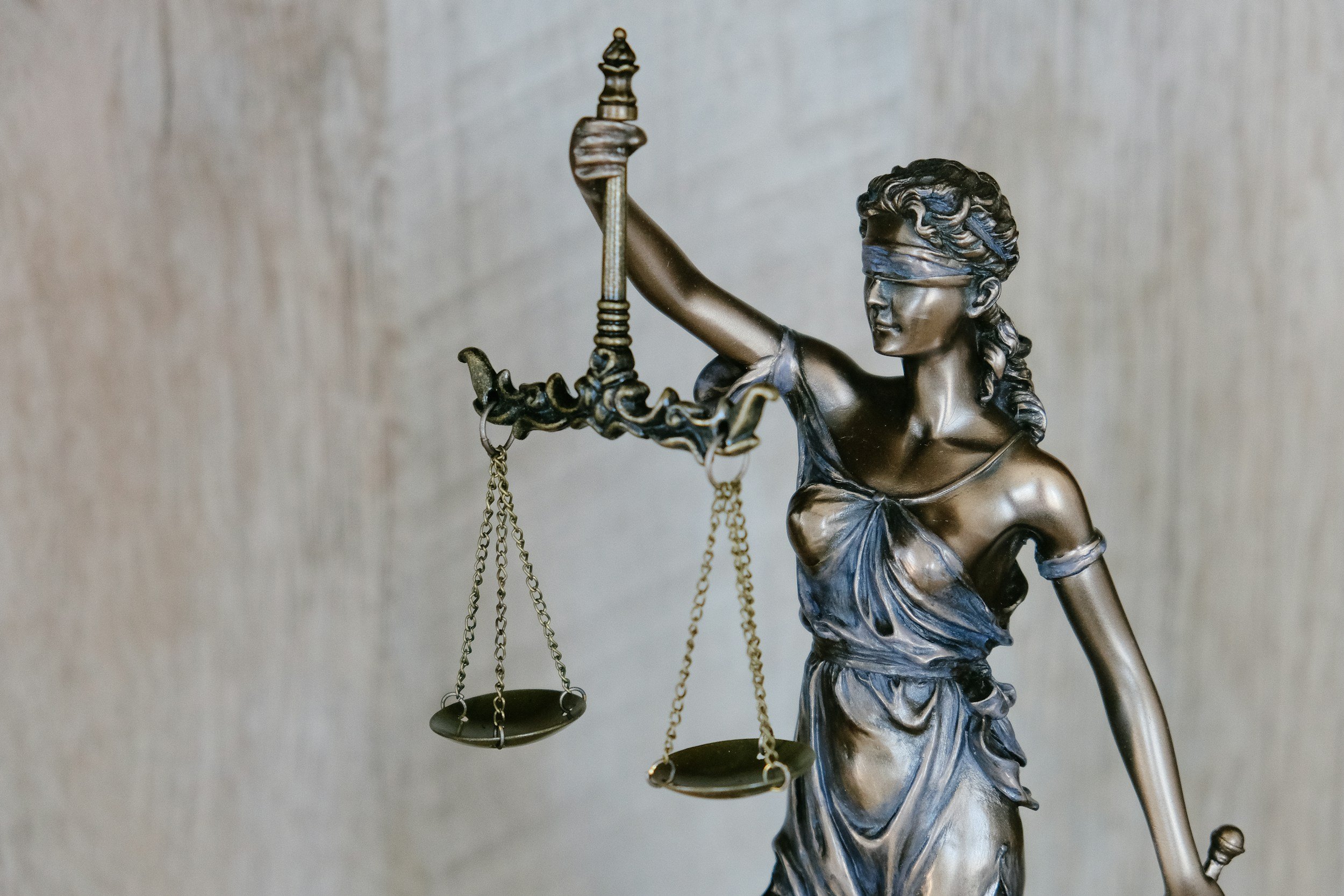
Law Essay Competition
Should the law reflect morality, or remain neutral? Discuss with reference to a specific legal system.
To what extent should the judiciary be able to strike down legislation passed by Parliament? (Consider this in the context of constitutional supremacy vs. parliamentary sovereignty.)
How should courts balance individual rights with public safety?
(Constitutional/Tort Law overlap)Is the rule of law under threat in democratic societies?
How far should freedom of speech be protected in the digital age?
Philosophy Essay Competition
Can there be objective moral truths, or is all morality relative?
“I think, therefore I am” – is Descartes’ claim still convincing today?
Are humans truly free, or are we determined by causes beyond our control?
Can artificial intelligence possess consciousness or moral responsibility?
Do we have a moral duty to future generations?
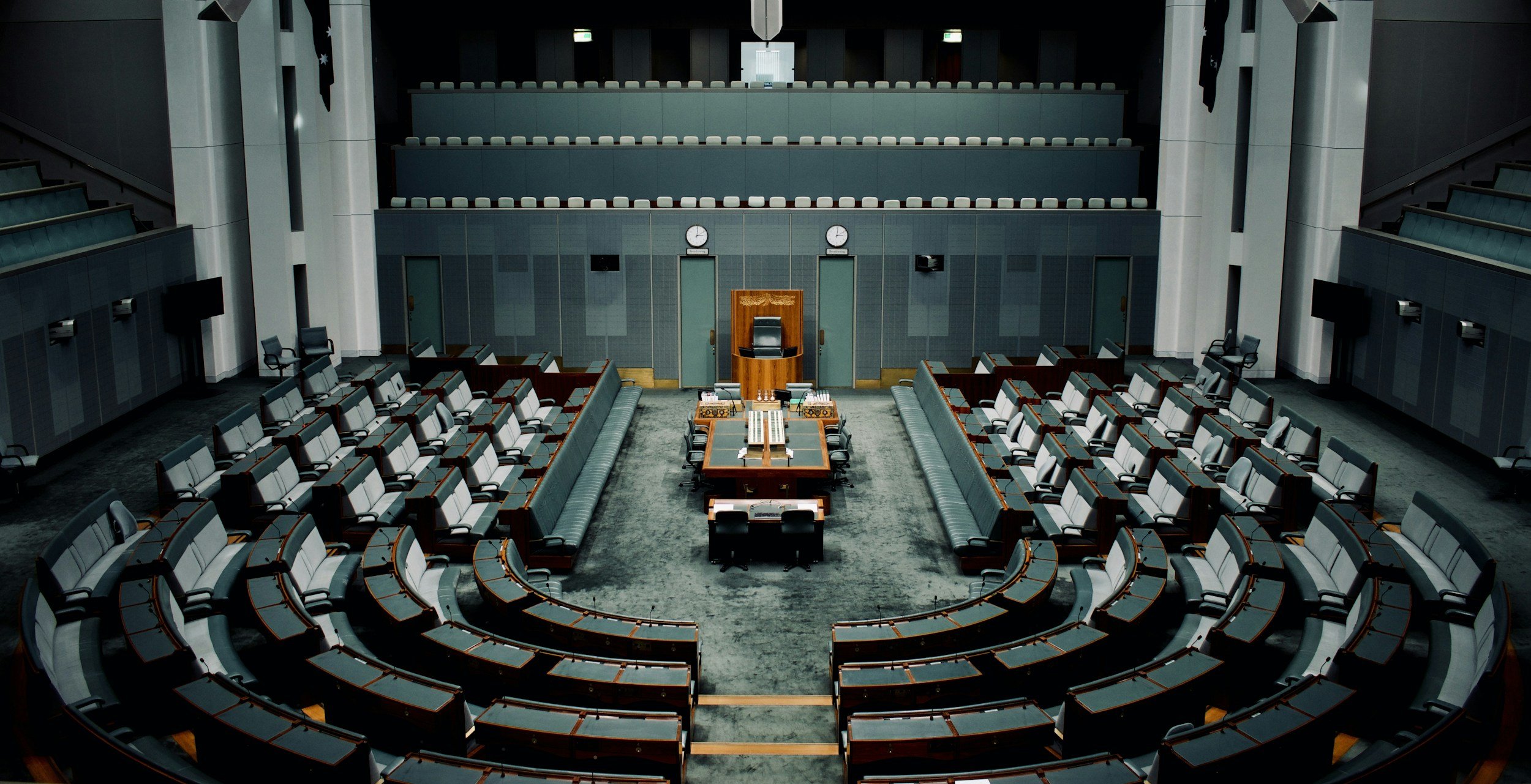
Politics Essay Competition
To what extent is democracy the best form of government?
How has social media changed the nature of political debate?
Can global challenges like climate change be solved through national politics alone?
To what extent does populism threaten liberal democracy?
Is the separation of powers still effective in modern governments?
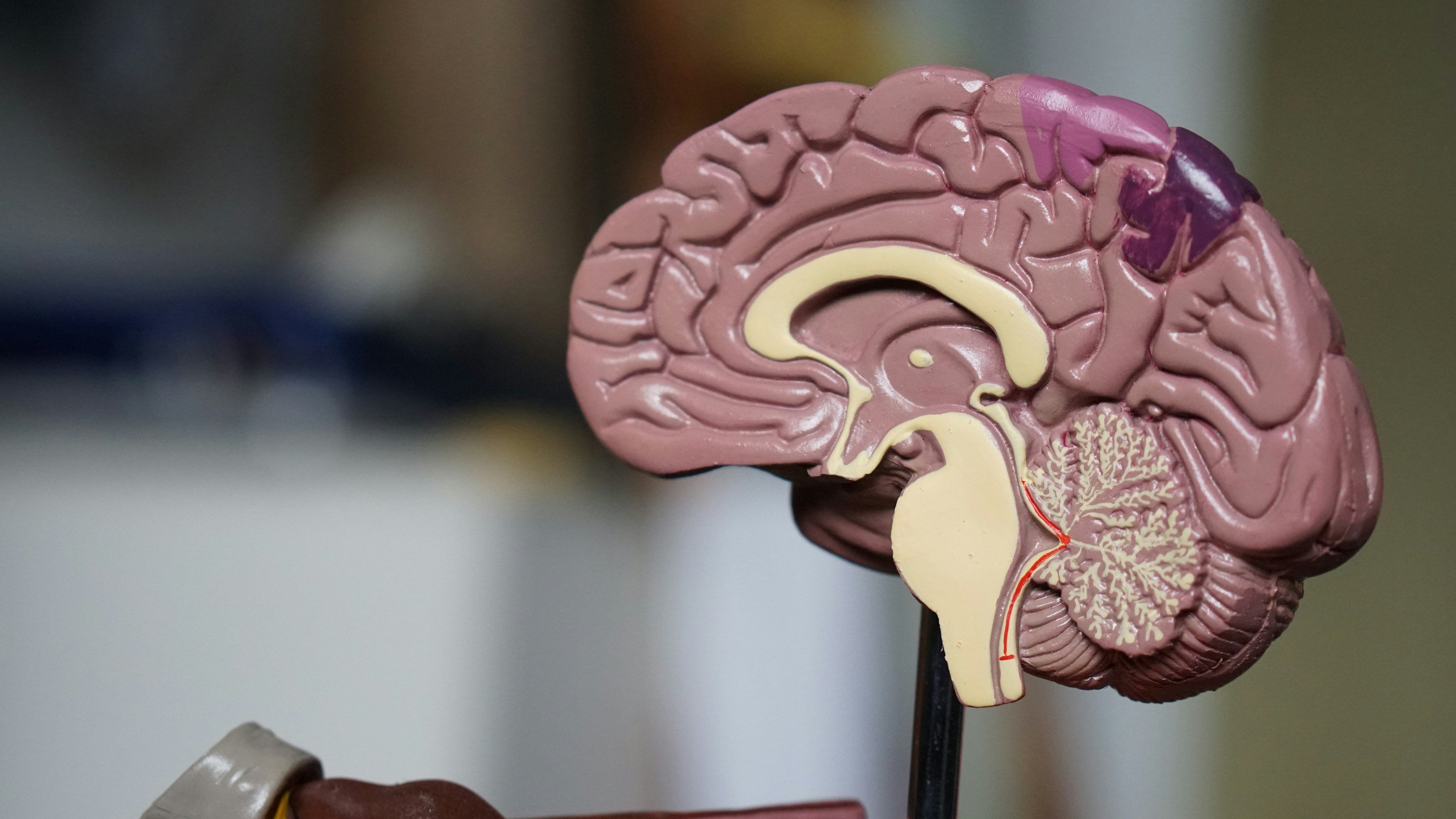
Psychology Essay Competition
Are humans more shaped by nature or nurture?
To what extent can memory be trusted as a reliable source of information?
Is mental health best understood through biological, psychological, or social factors?
How do cognitive biases influence decision-making?
What does psychological research reveal about the roots of prejudice?
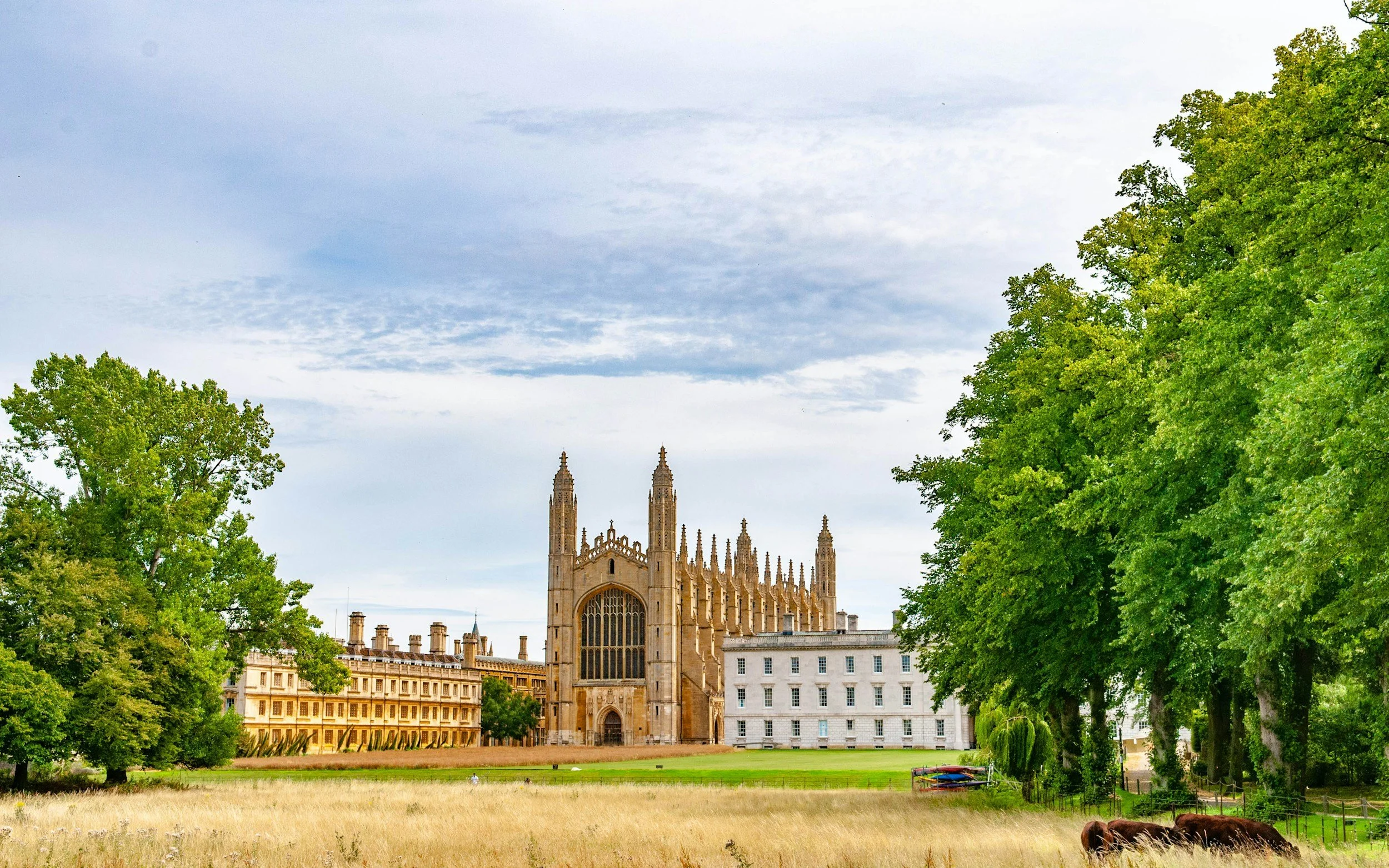
Choose Your Own Title
If none of the essays above takes your fancy or if you can’t find the subject that you want to write about above, we have now introduced the option for you to create your own title and provide an essay on any subject and any title!
Submit your essay using the following link
Submit Here!
FAQ
Who Can Enter?
The essay competition is aimed at students between the ages of 15 and 19 who are pre-university.
Rules
There is a 1500-word limit on all essays
All essays must be referenced (the style of referencing is up to the discretion of the student)
Students must only submit one essay
Work must not be plagiarised or written by AI.
Any violations of the following rules will lead to submissions not being considered.
Deadline
The Deadline for all essays is 23rd June 2026 at 23:59.
The essay competition is free to enter (unless the student is submitting an entry after the deadline).
If, for any reason, you miss the 23rd June deadline, you will have an opportunity to make a late entry under two conditions:
A late entry fee of £20 must be paid alongside your submission.
You can do so by clicking the following link and purchasing the ‘Late Entry Essay Competition’ HERE
Your essay must be submitted before 30th June 2026 at 23:59 using the same form!